
Typically, when you think of raising someone, you are thinking about children or zombies. In both cases, you are correct. No, don’t get your knickers in a twist. You know at least one zombie. Admit it. No? Still? *sigh*
What’s in it for you?
 Custom Search
Patriots & Ex-Pats
Strength & Weakness: Balance
Over the last week, we have explored the innate and learned behavior which defines and exhibits strength and weakness. To conclude this series, let’s explore how to strike a healthy balance of the two. As the title suggests, balancing strengths and weaknesses is the key for both the individual and the couple.
Will ~ Introspection

Open communication is not accomplished by being inflexible.
Being strong-willed does not equate to being completely inflexible on all fronts. Being weak-willed does not mean giving in to every notion floated. Balance is reached in the ability to compromise. Simple? Hardly.
By design, compromise means both parties ceding some ground to create a middle ground on which to meet. More often than not, one party will give up the ground for the pair to share. This is not true compromise, but when done in an equitable, alternating pattern, it can be acceptable to both for a long period of time without resentment.
For the strong-willed, it means learning to give in on the items which do not compromise character. For the weak-willed, it means learning to take a place on the playing field and standing one’s ground.
Beliefs ~ Inspection

To effectively compromise, one must examine the belief system to determine non-negotiables. All which remains must be faced with an open mind and active listening skills. Whether the compromise is between friends, family or mates, it must come by means of open, honest communication.
Before clubbing the other person over the head with beliefs, one must learn the belief system of the other. (Attention audience: Belief system does not mean religion, although religion is a system of belief.) Compare and contrast the two and agree to mutually acceptable terms.
Terms can include encompassing certain beliefs while disregarding others. Disregarding a belief does not mean both people must give it up. For example, One believes nuclear power is the best solution to energy consumption. Mate does not have to believe nuclear power is the answer, but must respect One’s right to believe. Both mates agree not to let the belief become an issue in the relationship or marriage.
Character
 All character traits can be carried through to extremes. Both should examine their own characters before discussing the similarities and differences to determine what level of character is acceptable. This conversation will define such non-negotiable subjects as fidelity and honesty.
The best approach to the conversation is to let the other person describe the character Mate exhibits. By listening to what Mate has deduced of one’s character, one can decide whether or not the self-assessment is accurate in practice.
Often, we idealize our own character and are lured into believing we are better than we act. Actions speak louder than words and are only drowned out by inaction. Complete honesty about one’s character begins with knowing how others perceive that character.
Prudence & Insight
The most difficult concept to compromise is the one of knowing which answers are best for the couple. Between them, they must choose who is to handle which decisions. From finances to child-rearing, discussing the boundaries is essential to longevity.
In this arena in particular, societal views, expectations and opinions should be wholesale ignored. The decisions within a relationship must be based on individual abilities and the willingness to accept such responsibility. When no natural leader emerges, the couple must agree to act as a unit to conquer the task.
For example, society deems men better equipped to handle money. When the man has a history of bad financial decisions and the woman is a trained accountant, society’s view is skewed and should not apply.

Honor & Courage
Both partners must have honor and courage, but not in equal measure. Both must honor the compromises reached through honest dialogue. Both must have the courage to resist societal norms’ imposition on those compromises.
Barring illegality of the compromise, the couple must be able and willing to stand before their families and peers to declare: “What happens in our home does so because we make it happen. You have no right to judge us.”
This validation can be one of the compromises from Prudence & Insight, merely on the grounds one mate may be better equipped to be the marital spokesperson. However, both mates must subscribe to the validation for the couple to survive.
It takes two.
The third segment of this series asked:
How do these traits make men and women compatible when the characteristics are not in equal measure?”
In compromise can the sexes settle into a common ground where one mate’s abilities and strength of character can compensate for the weakness in the other. In compromise do both become stronger.
~~~~~~~~~~
If you have missed the beginning of this series, visit the following links to catch up. The comments are important to understanding how we got to this post.
Strength & Weakness: His vs. Hers
~~~~~~~~~~
How has compromise strengthened your or Mate’s character in your relationship? Has the failure to compromise ended a relationship? What have you learned in this series?
~~~~~~~~~~
© Red Dwyer 2011
Reblogging of this or any other post on The M3 Blog is expressly forbidden.
Copyright and Privacy Policy available in The Office.
Posted by Red on December 21, 2011
https://mommasmoneymatters.com/compromise/
Writer’s Spotlight: Roger Grubbs
Roger Grubbs is one of the founding members of the M3 Coffee Shoppe. He brings to the table more than 30 novels. Red picked his brain to find out what fuels all the suspense which escapes his fertile imagination.
M3: Roger, what is the quick introduction you would give to M3 Readers?
RG: Born & raised in Alabama, graduate of Auburn University, husband, father, author of over 30 books, publisher, market analyst, owner of Market Consultants since 1979, Who’s Who among company executives, President’s Club with top stock brokerage firm. Currently residing in Florida.
 M3: Is there anyone you want to thank?
RG: First and foremost, I thank God for providing me with the talents that I have. I also would like to thank all the friends and family in my life that have influenced me to pursue my dreams which include my writing career. To be truthful with you, when I was in college, English was my worst subject. If anyone had told me I would become a writer for a living, I would have said they were crazy. But, guess what? That has been my sole source of income since 1979. Go figure.
M3: Where did you get your start in the industry?
RG: At the bottom! Doesn’t everybody? Actually, I started my own company in 1979, writing newsletters. In order to sell my publications, I was forced to learn the business of copywriting. I became fairly good at what I was doing. Soon other companies approached me to write advertisements for them. Then, I started writing true crime novels as a hobby and eventually switched to fiction. I love fiction. It is much more entertaining.
M3: It seems you fell in! Any advice you can give the budding writers in the M3 audience?
RG: Don’t expect to get rich overnight. While it may happen for some, you will be sorely disappointed if that is your goal. On the other hand, if you really like what you are doing, nobody is going to be able to stop you. Success is measured in one satisfied reader at a time. I have it made in that category because my wife will not allow me to write anything that she isn’t satisfied with. There you go. That is my satisfied reader. Actually, many of my stories were written for her. I am proud to say that others enjoy them too.
M3: You really do have a muse. How do you find the time to write?
RG: First thing in the morning I write while my mind is alert and creative. Then I take care of business as a market analyst. I keep up with twenty-two different markets every day. We have thousands of subscribers to our services worldwide. Between commentaries, newsletters, and market updates, I write. When you love to write, you seem to be able to find time to do it. I squeeze writing into every spare moment. Occasionally I have dreams, and this gives me fresh ideas to begin working on the next morning.
M3: With all you do everyday, do you go on hiatus?
RG: What kind of animal is that? If you are talking about taking a break from my writing, I generally take a hiatus between 12:30 and 1:00 every day. Nap time! If you are talking about a hiatus for my characters and their plots, I generally give them a few minutes before sending another crisis at them to deal with. Can’t let our readers get bored. Since I jump from one project to another, I feel I am taking a break in the process. I am constantly busy, but concentrating on one thing at a time. I never stop.
M3: Sounds tiring. What is in the works now?
RG: I prefer to work on four or five different projects at the same time. My goal is to have something for every age group in as many genres as possible. I have a picture book that I am working on for preschoolers. I am finishing up on a book targeted to 6- to 8-year-olds. And, of course, I am always working on a new adventure for Dr. Andrew Rogers. Other than that, I have a few ideas floating around. I would be amiss not to mention two sequels to The Twelve SEALs.
M3: What makes The Twelve SEALs close to your heart?
 RG: I enjoyed writing each and every one of my novels. But the one I am concentrating on at the moment is The Twelve SEALs and its sequels, which involve human trafficking. The reason I am doing this is to expose a global problem that is spiraling out of control. Innocent victims are being kidnapped, taken from their families, and sold into slavery. This life of torture is beyond comprehension. After doing extensive research, I am convinced many of the disappearances of our young people are connected with this problem. The average lifespan of a person that is being abused in this manner is only five to ten years after their abduction.
M3: How is The Twelve SEALs different from everything else in the genre?
RG: The Twelve SEALs is written for the purpose of informing the public about the alarming statistics connected with human trafficking. In order to accomplish that, I chose to convey this message through a work of fiction to keep the reader’s attention. A book of fiction should entertain; otherwise it would be listed under true crime. The characters in this novel are larger than life heroes. They portray the true character of the Navy SEALs, yet the message is clear, concise, and to the point. Human trafficking is a horrendous act that needs to be dealt with and stopped.
M3: Time for a secret. What is it you would tell me, but probably wish I would keep a secret?
RG: I cannot spell and don’t know how to punctuate. Now before you get the wrong idea, I have a very good assistant that helps me with the editing. One of the few novels that I wrote without any help consisted of one paragraph, and it was a more than 50,000 words. English is not my best subject. I do have this one talent. It seems I am constantly inventing words that do not exist – yet.
M3: In 15 words or less, tell the M3 Readers why they need a copy of your book?
RG: My novels are written to leave readers informed, thoroughly entertained, and wanting more.
~~~~~~~~~~
Dear M3 Readers,
Please take a few moments to check out Roger Grubbs and his suspense novel, The Twelve SEALs. You can purchase the ebook or the paperback edition. Visit Grubb’s Dr. Andrew Rogers website to get to know his character a bit better.
Thank you for your continued support to the talented M3 Coffee Shoppe artists.
Red.
~~~~~~~~~~
(c) Ann Marie Dwyer 2012
Reblogging of this or any other post on Momma’s Money Matters is expressly forbidden.
Copyright and Privacy Policy available in The Office.
Posted by Red on December 21, 2011
https://mommasmoneymatters.com/roger-grubbs/
Tips for Keeping Your Child Unplugged
Unplugging your child requires your intervention and the child’s cooperation. Here are some tips for both parents and children to stay “unplugged” in the high-tech age:
Fewer Temptations

Remove the temptation entirely. I am not advocating tossing out the television, but children should not be plugged into the iPod, Blackberry, television, game console or PC every waking moment of every day. Limit the number of devices you purchase for your children. Ask them if given the choice between a video game or an iPod, which would they choose.
Limit the usage.
Technology comes only after homework and/or housework. During the summer, 47 hours of television can be crammed into a parent’s 10 hour workday. If the chore chart looms large before the television may be turned on, housework will be done.
Set a schedule.

Only One Hour
Employ your children to help you with this. After school they may have one techno-hour. Let them decide which devices they would like on which days. Hand them a TV guide to help. During the summer, techno-hours (2-3) may be spent after such activities as sports, yard work, jobs and visiting friends (to do something other than watch television). Assist in the endeavor as well: Agree to download music or games for them, so that they can maximize their techno-time.
Eat a balanced meal.

Balanced Meal
No techno-time may be spent with any food or drink involved. No soda by the computer. No chips with the iPod. No text messaging during dinner. Separation of activities will help develop communication skills being lost to the text-message generation. Even the squarest parents could learn a few things during a conversation with a teenager.
Investigate opportunity.
Every community has activities for teens and tweens for the summer and after school. Let them do some research on the computer to find out about things that may interest them. If they come up empty, have them volunteer at a food bank, soup kitchen or nursing home. These activities build character and appreciation.
Take in a show.
No, don’t trade the small screen for a big screen. See something live. Go to a ballet, symphony performance, classical concert or opera. Take a night out to go to a theater production or a musical. See an exhibit at an art gallery or a natural history museum.
Take a class.
 Hobby classes are common during the summer. Kids don’t have to go to the bingo hall with the blue-haired crowd, but they can enjoy ceramics, painting, sculpting or graphic design. Choose a class that will help them determine what career path they would like to travel.
Just say no.
If you child lacks the self-discipline necessary to adhere to the rules, pull the plug. Password the computer or install a computer nanny. Take the power cord to the game console, and put it in your sock drawer. Lose the jumper between the satellite box and the television. (Ant races get very boring.)
Bottom Line
One way or the other, parents need to keep children unplugged, but not necessarily in a technological vacuum. Remember, the key is everything in moderation.
~~~~~~~~~~
(c) Ann Marie Dwyer 2011
Reblogging of this or any other post on Momma’s Money Matters is expressly forbidden.
Copyright and Privacy Policy available in The Office.
Posted by Red on December 20, 2011
https://mommasmoneymatters.com/unplug-kids/
Strength & Weakness: Nurture
Yesterday, we established self-sacrifice as a strength, but identified the same characteristic as a weakness. Natural self-sacrifice is truly a strength which furthers humanity. Self-sacrifice as a weakness is not an instinct, but instead, is learned behavior.
Out of the Bubble
Outside the vacuum we are exposed to societal expectations and contemporary norms. Over time both change, just the way fashions, laws and personal attitudes do. Looking at the influences themselves shows how the instinctual strength turns into weakness.
Family
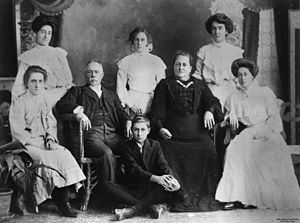
Home life is one of the smallest social circles but the largest influence on our attitudes toward gauging ourselves as important and establishing healthy self esteem. Two major influences are our parents’ example to and their opinion (perceived or stated) of us. Parents are a perfect example of how to handle oneself or a poignant display of what not to do.
Perceived Opinion
When the child is left to perceive what the parent thinks, assumption can lead down a rocky path. Actions speak volumes to the child whose parents do not validate his status as a person, in the family and in society in general. The values necessary to establishing good self-esteem are central to parenting a strong child. If those lessons are left to the child’s observation of the parents, often the strength dissipates.
Stated Opinion
Blatantly informing a child of the parental opinion is a two-edged sword. A positive opinion reinforces strength. A negative opinion erodes it. Children have a natural desire for parental approval. Lacking such approval creates a morass of self-doubt which produces weakness.
Peers
Peer pressure is not child’s play since it extends into adulthood. Peers are the next largest social circle which influences how we view ourselves in the context of society. Stronger people will withstand peer pressure more easily than weaker ones. It is of note, not all strong people will apply positive peer pressure. Within the earliest peer circles, the practice of self-sacrifice becomes a personal norm, unlikely to change direction, but likely to intensify.
Marriage

The smallest social circle is where the weakness shows the most impact. The self-sacrifice in marriage can be mild, giving up belief systems, religious or occupational pursuits, or monumental, succumbing to emotional and physical abuse. When self-sacrifice within a marriage is strictly to maintain the status of the marriage, rather than to strengthen it through personal growth, it is an insurmountable weakness.
The Big Picture
Once exposed to the society as a whole, the largest circles appear. National, political, religious, occupational and fraternal affiliations broaden our scope of tenets and ideals. Seeking unqualified acceptance into circles this large requires a level of self-sacrifice which is weakness.
How did it happen?
In our desire to be accepted into society, we can sacrifice our own ethical character to garner approval. The moment self-sacrifice turns from helping humanity to furthering social standing is when strength becomes weakness.
X,Y
Unlike nature, the weakness created by self-sacrifice is not equally distributed between men and women. While men are not immune, women fall prey to weakness far more often than men. Beginning with the initial examples of parents, women are met with more pressures which erode their self-esteem.
 Parental molding of what being a woman is
- Peer pressure of other girls and their parents’ ideals
- Society’s glorification of certain women/girls
- Society’s disdain for certain women/girls
- Stereotyping of beauty
In terms of abusive relationships, women are more often the physical victims, but men are just as likely to be emotional victims. Both sexes withstand the abuse to maintain the affiliation based on both familial and societal norms. They sacrifice their own health and well-being to meet someone else’s expectation of what they should be. If children are present, they become the parental example.
~~~~~~~~~~
If you have missed the beginning of this series, visit the following links to catch up. The comments are important to understanding how we got to this post.
Strength & Weakness: His vs. Hers
~~~~~~~~~~
Which influence do you think is the most powerful? Which one is the easiest to overcome?
~~~~~~~~~~
(c) Ann Marie Dwyer 2011
Reblogging of this or any other post on Momma’s Money Matters is expressly forbidden.
Copyright and Privacy Policy available in The Office.
Posted by Red on December 20, 2011
https://mommasmoneymatters.com/nurture-strength/
Compliments of The M3 Readers